Type K Electric Plug - Danish Standard (DS 60884-2-D1)
Type K Danish plug complete guide: three round pins with offset ground. Being phased out since 2008. Used in Denmark, Greenland, and Bangladesh.
Interactive Type K Plug Animation
Key Facts
History & Development
Type K represents Danish pragmatism meeting Scandinavian safety consciousness. Developed in 1947 by DEMKO (Danmarks Elektriske Materielkontrol), it emerged when Denmark was rebuilding after German occupation. Rather than adopt German standards (politically unpalatable so soon after the war) or British standards (incompatible with Continental voltage), Denmark created its own grounded plug system.
The design featured three round pins with the ground pin offset - similar to Type F but incompatible, ensuring Danish electrical sovereignty. This wasn't mere nationalism; Denmark argued their design was safer, with the earth pin making contact first and breaking last, and the compact size better suited Danish homes than bulky Schuko plugs.
Greenland adopted Type K through its connection to Denmark, as did the Faroe Islands. Bangladesh uses it due to Danish development projects in the 1970s-80s that installed Danish electrical systems. Parts of West Africa encountered Type K through Danish aid programs, creating unexpected pockets of Danish electrical standards in developing nations.
Denmark's 2008 decision to phase out Type K in favor of Type E/F was controversial. While new installations use European standards, millions of Type K sockets remain, and many Danes see their unique plug as part of national identity - hygge extends even to electrical fittings. The transition is slow, with Type K likely to persist for decades.
Detailed Technical Specifications
Dimensions
- pins:
- 4.8mm diameter x 19mm
- pin Spacing:
- 19mm between live/neutral
- ground Pin:
- 4.8mm diameter, offset 13.5mm
- configuration:
- Similar to Type E but incompatible
Performance
- Standard:
- DS 60884-2-D1 (formerly DS 107-2-D1)
- Max Power:
- 3680W at 230V (16A)
- Test Voltage:
- 2500V for 1 minute
- Temperature:
- -20°C to +60°C operating range
🌍 Real-World Usage Patterns
Most sources just list which countries use Type K, but here's the reality: not all usage is equal. This breakdown shows actual dominance in real outlets.
Traveler's Reality Check
✅ Travelers will find Type K as the dominant plug type in 2 countries.
Advantages & Disadvantages
✓ Advantages
- •Compact design for 16A rating
- •Earth pin configuration ensures safety
- •Accepts Type C Europlugs
- •Robust construction
- •Good for Nordic climate conditions
✗ Disadvantages
- •Incompatible with Type E/F
- •Being phased out in Denmark
- •Limited international compatibility
- •Requires adapters for most devices
- •Declining availability of compatible equipment
Evolution & Modern Developments
Type K's story is one of gradual obsolescence. While technically sound, EU harmonization pressure led Denmark to adopt Type E/F for new installations from 2008. However, the transition is generational - existing Type K sockets aren't required to be replaced, meaning Danish homes often have both standards.
Modern Danish sockets are "combo" units accepting Type K, E, F, and C plugs - an expensive but practical solution. Greenland maintains Type K more strictly than Denmark itself, while Bangladesh is gradually transitioning to Type C/D. The phase-out illustrates how even good technical standards can succumb to international harmonization pressures.
All 2 Countries Using Type K


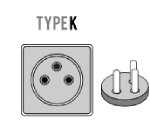
Type K Plug
Quick Specifications
- Pins:
- 3 round pins (offset ground)
- Voltage:
- 220-240V
- Current:
- 16A
- Grounding:
- Yes
- Compatibility:
- Accepts C
Global Coverage
Related Plug Types
🧳 Travel Tip
Always check voltage compatibility. Most modern electronics are dual-voltage (100-240V), but older devices may require a voltage converter.
