Type I Electric Plug - Australian/Chinese Standard (AS/NZS 3112)
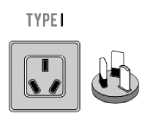
Type I plug complete guide: distinctive V-shaped flat pins. Used in Australia, New Zealand, China, and Argentina. Mandatory pin insulation since 2005.
Interactive Type I Plug Animation
Key Facts
History & Development
The Type I plug tells the story of Australia's unique approach to electrical safety. Developed in 1937 and formalized in 1938 as Australian Standard C112, it features two flat pins arranged in a V-shape with an optional ground pin - a configuration unlike any other global standard. The angled pins were a deliberate safety feature, making it impossible to insert the plug incorrectly and ensuring proper polarity.
The design's originator is disputed, but often attributed to Pat O'Brien of the New South Wales Electricity Commission. Australia needed a plug that could handle their 240V system safely while being distinct from British standards - a statement of independence from the colonial power. The V-configuration also provided mechanical advantages, creating a more secure connection that wouldn't easily pull out.
China's adoption of Type I in the 1990s gave this standard its largest user base. As China modernized its electrical infrastructure, they chose the Australian standard for its safety features and 10-amp capacity. Argentina independently developed an almost identical standard, creating an interesting case of convergent evolution in electrical design.
New Zealand adopted Type I simultaneously with Australia, and the two countries have maintained perfect electrical compatibility ever since. The plug has become so identified with the region that it's often called the "Australian/New Zealand standard" despite its use in China affecting far more people.
Detailed Technical Specifications
Dimensions
- live Pins:
- 6.5mm x 1.6mm x 17.3mm
- pin Angle:
- 30° from vertical (V-shape)
- ground Pin:
- 8.0mm x 2.8mm x 20mm
- spacing:
- 13.7mm between live/neutral
Performance
- Standard:
- AS/NZS 3112
- Max Power:
- 2400W at 240V (10A), 3840W (15A variant)
- Test Voltage:
- 3000V for 1 minute
- Temperature:
- -10°C to +60°C operating range
🌍 Real-World Usage Patterns
Most sources just list which countries use Type I, but here's the reality: not all usage is equal. This breakdown shows actual dominance in real outlets.
Traveler's Reality Check
✅ Travelers will find Type I as the dominant plug type in 17 countries. You might encounter it in 1 additional countries, but bring backup adapters.
Advantages & Disadvantages
✓ Advantages
- •V-shape prevents incorrect insertion
- •Secure connection resists pulling
- •Partially insulated pins standard since 2005
- •Compact design for 10A rating
- •Safety certified for 240V systems
✗ Disadvantages
- •Not compatible with any other type
- •Pins can bend if forced
- •Ground pin sometimes omitted unsafely
- •Different Chinese and Australian versions
- •Requires specific orientation
Evolution & Modern Developments
Type I has evolved significantly for safety. Australia mandated partially insulated pins in 2005, with 10mm of insulation preventing finger contact with live metal. New Zealand followed in 2008. Modern Australian sockets include safety shutters, and "extra safe" designs require simultaneous insertion of all pins.
China's version differs slightly - while visually identical, Chinese Type I operates at 220V/50Hz versus Australia's 230V/50Hz, and build quality varies significantly. Argentina uses a wider-spaced variant that's incompatible with Australian/Chinese Type I, despite looking similar.
Smart Type I plugs with app control and energy monitoring are now common in Australia. The standard remains strongly entrenched in all user countries with no serious consideration of change.
All 18 Countries Using Type I
south-america (1 countries)

oceania (14 countries)


asia (1 countries)

africa (2 countries)


Type I Plug
Quick Specifications
- Pins:
- 2/3 flat pins (V-shaped)
- Voltage:
- 220-240V
- Current:
- 10A/15A
- Grounding:
- Optional
- Compatibility:
- None
Global Coverage
Related Plug Types
🧳 Travel Tip
Always check voltage compatibility. Most modern electronics are dual-voltage (100-240V), but older devices may require a voltage converter.
