Oceania Electric Plug Types
Oceania's electrical landscape perfectly illustrates the contrast between continental consistency and island diversity, where Australia and New Zealand's uniform Type I system gives way to a patchwork of standards across thousands of Pacific islands.
The Australian Type I plug, with its distinctive angled pins, was designed for safety in harsh conditions and has become the gold standard from Perth to Auckland, creating a seamless electrical experience across the Tasman.
Yet venture into the Pacific, and you'll discover a fascinating electrical mosaic: French Polynesia uses European Type C and E plugs reflecting its French governance, American Samoa follows US Type A/B standards, while independent nations like Fiji have adopted various systems based on historical ties and practical considerations.
For travelers island-hopping through paradise, this means packing a universal adapter is as essential as sunscreen, especially considering that many remote islands rely on limited generator power or solar systems rather than 24/7 grid electricity.
Interactive Oceania Map
Plug Types Used in Oceania
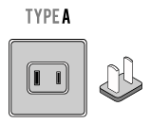
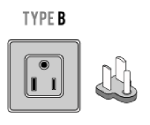
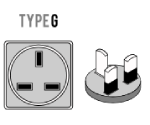
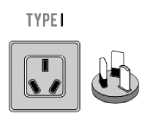
Interactive Demonstration - Most Common Oceania Plugs
Type A - North American/Japanese 2-pin
Type A electrical plug features two flat parallel blades and is the standard ungrounded plug used in North America, Central America, and Japan. This plug design dates back to 1904 and remains one of the most widely used plug types globally.

Type B - North American/Japanese 3-pin grounded
Type B electrical plug is the grounded version of Type A, featuring two flat parallel blades plus a round grounding pin. This three-prong plug provides additional safety through its ground connection and is the standard grounded plug in North America.

🌍 Real-World Usage Patterns Across Oceania
Colonial history and trade relationships shaped Oceania's electrical landscape. Here's the practical reality of what plugs you'll actually encounter:
Type I
14 countriesType B
4 countriesType G
1 countriesType A
4 countriesColonial & Historical Influences
🏝️ Pacific diversity reflects varied colonial administration: Australian Type I dominates the region, American influence appears in former US territories, while smaller islands often adopted systems from their colonial administrators or geographic neighbors.
Overview
Oceania's electrical systems are dominated by the Australia-New Zealand standard (Type I), but Pacific Islands show remarkable diversity due to different colonial histories, geographic isolation, and varying development levels.
Recommended Adapter
Type I adapter covers Australia/New Zealand. Universal adapter needed for Pacific Island travel due to mixed systems (Type A/B, Type C/F, Type G, Type I).
⚡ Voltage Warning
Australia/New Zealand use 230V. Pacific Islands vary: some use 110V (American influence), others 230V (Australian/British influence). Check each island specifically.
Transportation & Power Access
🚂 Trains
Australian trains provide power outlets on intercity services. New Zealand trains have limited power amenities.
🚌 Buses
Modern long-distance buses in Australia/New Zealand offer USB charging. Island buses typically lack power options.
✈️ Airports
Major airports (Sydney, Melbourne, Auckland) have comprehensive charging facilities. Island airports vary widely.
🏨 Hotels
Australian/New Zealand hotels standard Type I outlets. Pacific Island resorts may have multiple outlet types for international guests.
All Oceania Countries
| Country | Plug Types | Voltage | Frequency | Description |
|---|---|---|---|---|
 Australia Australia | Type I | 230V | 50Hz | Australia uses Type I electrical outlets with 230V at 50Hz frequency. Australian/New Zealand standard with angled pins for secure connection. Unique design prevents accidental disconnection. |
 Cook Islands Cook Islands | Type I | 240V | 50Hz | Cook Islands uses Type I electrical outlets with 240V at 50Hz frequency. Australian/New Zealand standard with angled pins for secure connection. Unique design prevents accidental disconnection. |
 Fiji Fiji | Type I | 240V | 50Hz | Fiji uses Type I electrical outlets with 240V at 50Hz frequency. Australian/New Zealand standard with angled pins for secure connection. Unique design prevents accidental disconnection. |
 Kiribati Kiribati | Type I | 240V | 50Hz | Kiribati uses Type I electrical outlets with 240V at 50Hz frequency. Australian/New Zealand standard with angled pins for secure connection. Unique design prevents accidental disconnection. |
 Marshall Islands Marshall Islands | Type B, Type A | 120V | 60Hz | Marshall Islands uses Type B, Type A electrical outlets with 120V at 60Hz frequency. Standard North American electrical system with grounded and ungrounded outlets. Most modern electronics work without adapters. |
 Micronesia Micronesia | Type B, Type A | 120V | 60Hz | Micronesia uses Type B, Type A electrical outlets with 120V at 60Hz frequency. Standard North American electrical system with grounded and ungrounded outlets. Most modern electronics work without adapters. |
 Nauru Nauru | Type I | 240V | 50Hz | Nauru uses Type I electrical outlets with 240V at 50Hz frequency. Australian/New Zealand standard with angled pins for secure connection. Unique design prevents accidental disconnection. |
 New Zealand New Zealand | Type I | 230V | 50Hz | New Zealand uses Type I electrical outlets with 230V at 50Hz frequency. Australian/New Zealand standard with angled pins for secure connection. Unique design prevents accidental disconnection. |
 Niue Niue | Type I | 230V | 50Hz | Niue uses Type I electrical outlets with 230V at 50Hz frequency. Australian/New Zealand standard with angled pins for secure connection. Unique design prevents accidental disconnection. |
 Northern Mariana Islands Northern Mariana Islands | Type B, Type A | 120V | 60Hz | Northern Mariana Islands uses Type B, Type A electrical outlets with 120V at 60Hz frequency. Standard North American electrical system with grounded and ungrounded outlets. Most modern electronics work without adapters. |
 Palau Palau | Type B, Type A | 120V | 60Hz | Palau uses Type B, Type A electrical outlets with 120V at 60Hz frequency. Standard North American electrical system with grounded and ungrounded outlets. Most modern electronics work without adapters. |
 Papua New Guinea Papua New Guinea | Type I | 240V | 50Hz | Papua New Guinea uses Type I electrical outlets with 240V at 50Hz frequency. Australian/New Zealand standard with angled pins for secure connection. Unique design prevents accidental disconnection. |
 Samoa Samoa | Type I | 230V | 50Hz | Samoa uses Type I electrical outlets with 230V at 50Hz frequency. Australian/New Zealand standard with angled pins for secure connection. Unique design prevents accidental disconnection. |
 Solomon Islands Solomon Islands | Type G, Type I | 220V | 50Hz | Solomon Islands uses Type G, Type I electrical outlets with 220V at 50Hz frequency. British-style three-pin system with built-in fuses for enhanced safety. Distinctive rectangular pins require specific adapters. |
 Tokelau Tokelau | Type I | 230V | 50Hz | Tokelau uses Type I electrical outlets with 230V at 50Hz frequency. Australian/New Zealand standard with angled pins for secure connection. Unique design prevents accidental disconnection. |
 Tonga Tonga | Type I | 240V | 50Hz | Tonga uses Type I electrical outlets with 240V at 50Hz frequency. Australian/New Zealand standard with angled pins for secure connection. Unique design prevents accidental disconnection. |
 Tuvalu Tuvalu | Type I | 230V | 50Hz | Tuvalu uses Type I electrical outlets with 230V at 50Hz frequency. Australian/New Zealand standard with angled pins for secure connection. Unique design prevents accidental disconnection. |
 Vanuatu Vanuatu | Type I | 220V | 50Hz | Vanuatu uses Type I electrical outlets with 220V at 50Hz frequency. Australian/New Zealand standard with angled pins for secure connection. Unique design prevents accidental disconnection. |
Frequently Asked Questions
Do Australia and New Zealand use the same electrical plugs?
Yes - both countries use Type I plugs with angled flat pins and 230V electricity. This makes trans-Tasman travel very convenient as the same adapter works in both countries. The systems are virtually identical.
Why do Pacific Islands have different electrical systems?
Pacific Islands inherited different electrical systems from their colonial powers: American territories use Type A/B, French territories use Type C/E, British areas use Type G, while independent countries often adopted Australian Type I systems or maintained colonial standards.
Is electricity reliable across Oceania?
Australia and New Zealand have world-class electrical reliability. Pacific Islands vary dramatically: resort areas and capitals generally have reliable power, while remote areas may have limited electricity hours or rely on generators.
What should I know about power costs in Pacific Islands?
Pacific Islands typically have very high electricity costs due to imported fuel dependency. Many islands generate power from diesel, making electricity 3-5 times more expensive than mainland countries. Solar power is increasingly common.
Do Pacific Island resorts provide adapters?
International resorts usually provide universal adapters or multiple outlet types to accommodate global guests. Local accommodations typically only have the country's standard outlets. Always bring your own adapters as backup.
Did You Know?
💡 Australia has one of the world's highest per-capita electricity consumption rates, partly due to energy-intensive mining operations
💡 New Zealand generates about 80% of its electricity from renewable sources, primarily hydroelectric and geothermal
💡 Many Pacific Islands are installing solar power systems to reduce dependence on expensive imported diesel fuel
💡 Australia's National Electricity Market covers the eastern seaboard and is one of the world's longest power grids
💡 French Polynesia uses the same electrical system as metropolitan France despite being 15,000km away
💡 Some remote Pacific Islands still lack grid electricity, relying entirely on solar power or generators
Electrical History
Australia developed its angled-pin system for safety and reliability in harsh conditions. New Zealand adopted the same standard. Pacific Islands inherited varied systems from different colonial powers, with some modernizing to Australian standards while others maintain original systems.
Cultural Context
Australia and New Zealand have high electricity consumption and excellent infrastructure. Pacific Islands balance traditional lifestyles with modern electrical needs, often relying on expensive imported fuel for generation.
Seasonal Considerations
Southern Hemisphere seasons (opposite to Northern Hemisphere). Tropical islands have consistent temperatures. Cyclone seasons affect power infrastructure in Pacific regions.
Countries Grouped by Plug Type
Type I (13 countries)
Type B, Type A (4 countries)
Type G, Type I (1 countries)
Oceania Travel Summary
Key Facts
- • 18 countries across Oceania
- • 4 plug types in use: A, B, G, I
- • Voltage range: 120V - 240V
- • Frequency: 50Hz (60Hz in some regions)
Travel Recommendation
Type I adapter covers Australia/New Zealand. Universal adapter needed for Pacific Island travel due to mixed systems (Type A/B, Type C/F, Type G, Type I).⚡ Australia/New Zealand use 230V. Pacific Islands vary: some use 110V (American influence), others 230V (Australian/British influence). Check each island specifically.